Sustainable tourism does not happen by chance. On the Mikkeli Region, tourism development is guided by shared goals, plans, indicators and practical actions that help preserve the area's natural, cultural and recreational values for future generations.
Measuring the carbon footprint of tourism
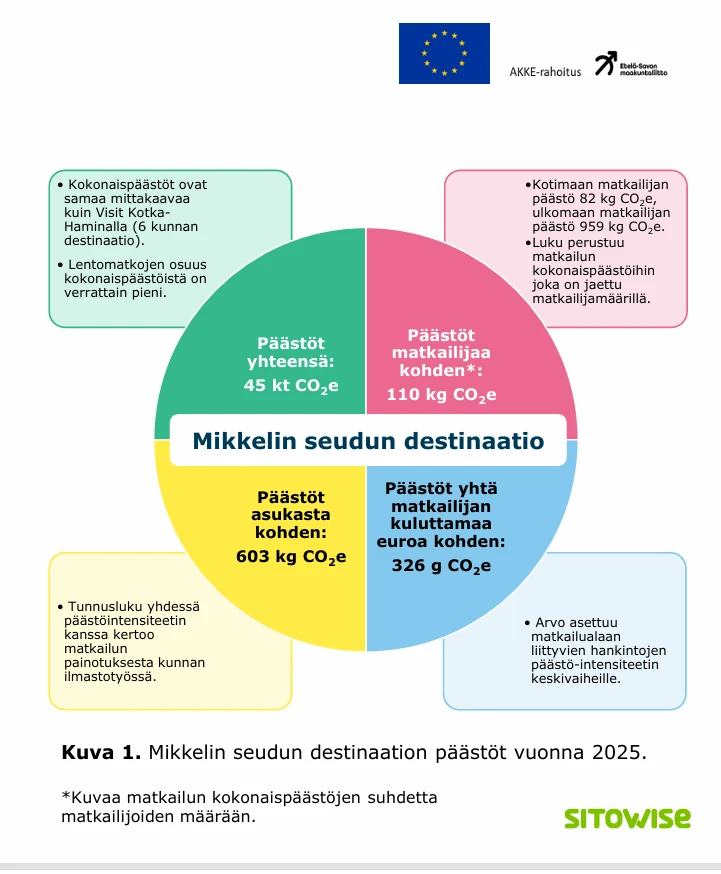
The Mikkeli Region has calculated the carbon footprint of tourism in cooperation with Visit Finland and experts from Sitowise. The calculation helps identify the most significant sources of tourism-related emissions and monitor progress in the coming years. Measuring emissions enables development efforts to be targeted where they have the greatest impact.
In 2025, the total carbon footprint of tourism in the Mikkeli region was approximately 45,000 tonnes of CO₂e, which is in line with the emissions of comparable Finnish tourism destinations. On average, the carbon footprint per visitor was 110 kg CO₂e, while the emissions intensity per euro spent by a visitor was 326 g CO₂e
A climate and sustainability plan guides development
A Climate and Sustainability Plan for tourism is being prepared for the Mikkeli Region to support the long-term development of the destination. The plan sets objectives and actions to reduce climate impacts, protect biodiversity, safeguard local cultural heritage and strengthen the positive impacts of tourism.
The plan also supports the international Glasgow Declaration on Climate Action in Tourism and the objectives of the Sustainable Travel Finland programme.
Link to the declaration: https://www.oneplanetnetwork.org/organisations/visit-mikkeli
Towards the Sustainable Travel Finland label
The Mikkeli Region is working together with local tourism businesses to achieve the Sustainable Travel Finland (STF) label. The STF programme supports the long-term development of tourism by promoting environmental responsibility, local culture and community engagement as integral parts of tourism services.
An increasing number of tourism businesses in the region are developing their operations through the STF programme or by obtaining recognised sustainability certifications.
Sustainable tourism is developed through collaboration
Sustainable tourism in the Mikkeli Region is also promoted through various development projects, networks and partnerships. Current work focuses on areas such as cycling tourism, sustainable travel chains, low-carbon solutions and water-related themes.
The collaboration brings together tourism businesses, municipalities, development organisations, educational institutions and other regional stakeholders.
A shared goal
Sustainable tourism is built through collaboration. In the Mikkeli Region, tourism businesses, municipalities, local communities and visitors work together to create a future where the area's nature, cultural heritage and local way of life are preserved for generations to come.